When in operation, about seven thousand scientists from eighty countries will have access to the LHC. Physicists hope to use the collider to test various grand unified theories and enhance their ability to answer the following questions:
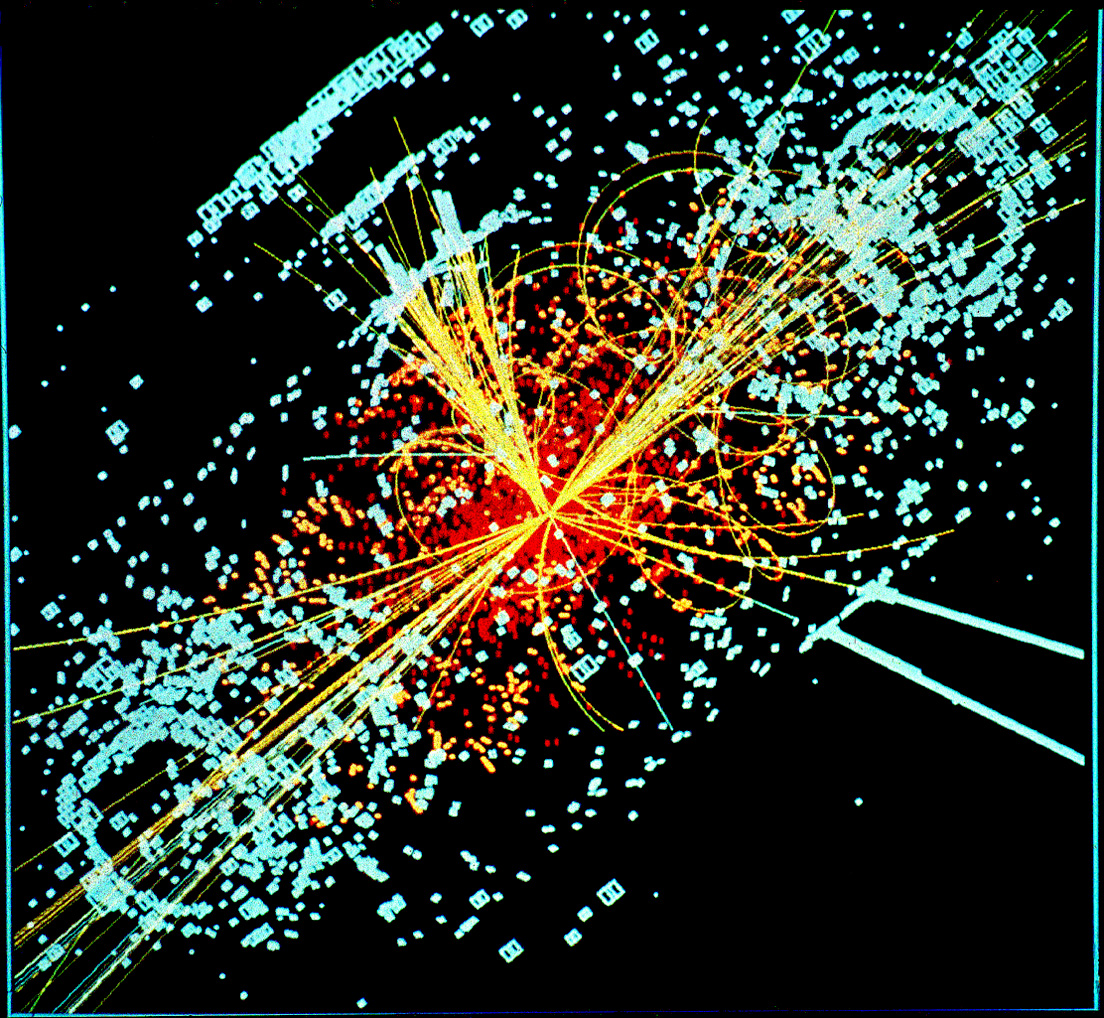
- Is the popular Higgs mechanism for generating elementary particle masses in the Standard Model realised in nature? If so, how many Higgs bosons are there, and what are their masses?
- Will the more precise measurements of the masses of the quarks continue to be mutually consistent within the Standard Model?
- Do particles have supersymmetric ("SUSY") partners?
- Why are there apparent violations of the symmetry between matter and antimatter See also CP-violation.
- Are there extra dimensions indicated by theoretical gravitons, as predicted by various models inspired by string theory, and can we "see" them
- What is the nature of dark matter and dark energy
- Why is gravity so many orders of magnitude weaker than the other three fundamental forces
- Is time travel (utilising either General theory of relativity or wormholes or black holes) possible
Renowned British astrophysicist Stephen Hawking has bet £50 the mega-experiment will not find the elusive particle seen as the holy grail of cosmic science. "I think it will be much more exciting if we don't find the Higgs. That will show something is wrong, and we need to think again. I have a bet of 100 dollars that we won't find the Higgs," said Prof Hawking.
Prof Hawking said the experiment could discover superpartners, particles that would be "supersymmetric partners" to particles already known about. "Their existence would be a key confirmation of string theory, and they could make up the mysterious dark matter that holds galaxies together," he said on the BBC. "Whatever the LHC finds, or fails to find, the results will tell us a lot about the structure of the universe," he said
No comments:
Post a Comment